

How to Choose a Custom Home Builder in Vancouver

Choosing a custom home builder in Vancouver is rarely just a price comparison. When homeowners first come to us about a custom home, price is almost never the real question underneath. What they are actually asking is whether we can accomplish the design intent and complete the project properly. Quality, execution and integrity. That's the filter that matters, even when it is not the first thing said out loud.
We've been doing this long enough to know what separates a smooth project from a difficult one: relevant local experience, communication, transparency, portfolio fit, and knowing your way around permitting in Metro Vancouver. Projects we’ve worked on — Bayridge, W18th, and Alta Lake — have reinforced that on actual projects, with real constraints and challenging deadlines.
If you're trying to understand how to choose a home builder, start by looking beyond the estimate. It won’t just be about a number, but about trust. The right builder should give you confidence in both the finished home and the process required to get there.
Our custom home building in Vancouver service page explains how Marwynn carries that responsibility from early planning and pre-construction through construction and handover.
Table of Contents
How to Choose a Home Builder in Vancouver: What to Look For Beyond Price
Price is easy to compare. It is also incomplete. Two estimates can appear to cover the same home while making very different assumptions about materials, site supervision, finish quality, allowances, scheduling, and what is excluded. A lower number at the beginning does not necessarily mean a lower final cost. It may simply mean that more of the cost has not been defined yet.
If we were advising a homeowner, we would weigh the following:
Can the builder execute the design intent, rather than simply build to minimum code?
Has the builder completed work at a comparable scale, finish level, and degree of complexity?
Do they understand the municipality where the home will be built?
How clearly and promptly do they communicate before a contract has even been signed?
Who will manage the project, and who will be present on site day to day?
Are the estimate, allowances, exclusions, billing process, and change-order procedure clearly explained?
Can they provide relevant references and completed work you can evaluate?
Building a custom home is a long working relationship. The builder must coordinate designers, consultants, trades, inspectors, suppliers, and the homeowner over many months. So know what to expect and trusting your builder is on top of the details is step one.
Why Licensing Actually Matters in BC
For most new-home construction in British Columbia, the builder must hold a current residential builder licence from BC Housing. Before construction begins, the builder must register the home and arrange mandatory third-party home warranty insurance. Both the licence and warranty coverage must remain current throughout construction.
Homeowners can search the BC Housing Public Registry of Residential Builders by company name, licence number, or responsible person. For a new home, you can also use the New Homes Registry to confirm whether the property has been registered, whether it is being built by a licensed builder, and whether third-party home warranty insurance is in place.
Most new homes built by licensed residential builders must carry 2-5-10 home warranty insurance: two years for labour and materials, five years for the building envelope, and ten years for structural defects, subject to the legislation, policy terms, and applicable exemptions. Limited exceptions exist, but for a typical custom home, licensing and warranty coverage should be confirmed before construction starts.
CHBA-BC and HAVAN Membership: What It Signals
Membership in the Canadian Home Builders' Association of BC (CHBA-BC) or the Homebuilders Association Vancouver (HAVAN) is not a substitute for a BC Housing licence, and it is not a guarantee that one builder will be the right fit for every project, but these memberships are a useful signal.
These voluntary associations provide ethics standards, education, professional development, and industry accountability. If a builder lists CHBA-BC, HAVAN, or another designation, verify it in the association directory and ask how that involvement improves its projects and client process.
Why Local Permit Experience Matters More Than People Expect
Vancouver, the District of North Vancouver, the City of North Vancouver, West Vancouver, Whistler, and Squamish do not process every residential project in the same way. Zoning, development permits, building permits, energy requirements, heritage considerations, environmental conditions, and submission expectations vary by municipality and property.
A builder does not approve the permit and cannot promise a municipal timeline. What an experienced local builder can do is identify likely requirements earlier, coordinate the right consultants, help assemble a more complete submission, and respond constructively when questions come back.
Local experience is therefore not simply about knowing someone at city hall. It is about understanding the sequence of decisions and documentation the project is likely to require. Ask a prospective builder:
Which municipalities have you worked in recently?
Which local projects are comparable to mine?
What permit or approval challenges did those projects involve?
At what stage do you join the architect and consultant team?
Who coordinates responses when the municipality requests revisions?
What parts of the permit process are included in your scope?
Strong answers describe the specifics about the project, the builder's role, and what was learned without implying control over the municipality.
Questions Worth Asking When You Review a Builder's Portfolio
Good photography can show taste and finish quality. It cannot show you how the project was managed. When reviewing a portfolio, ask questions that reveal what happened behind the finished images:
Have you built at this scale and finish level before?A builder of straightforward production homes may not be the right fit for a highly detailed architectural residence. The opposite can also be true.
What was technically difficult about this project?Listen for specifics: envelope detailing, structural coordination, excavation, heritage conditions, glazing, mechanical integration, or material sequencing.
Was the project completed by the same team that would manage mine?Company experience matters, but so does the experience of the project manager and site supervisor actually assigned to your home.
Can I speak with past clients?Ask references about communication, budget reporting, problem-solving, deficiencies, and how the builder behaved when something did not go according to plan.
How has the home performed since completion?Ask how deficiencies and warranty matters were handled. A builder's response after substantial completion is part of the work.
What part of this project is relevant to my home?A beautiful portfolio is only useful if the builder can connect that experience to your site, design, municipality, and priorities.
Communication, Contracts, and Billing Transparency
Many construction problems first appear as communication problems. Before choosing a builder, ask how information will move through the project. Will there be scheduled meetings? Written progress updates? A shared system for selections, approvals, and site documentation? Who is authorized to approve a change, and how will its cost and effect on the schedule be presented?
The contract should explain the scope of work, pricing structure, allowances, exclusions, payment schedule, insurance, warranty responsibilities, change-order process, and how disputes or delays will be handled. If an important promise exists only in conversation, ask for it to be written down.
Billing transparency matters just as much. Homeowners should understand:
Whether the project is fixed-price, cost-plus, construction-managed, or another arrangement
What is included in the builder's fee
How allowances are set and reconciled
How invoices and supporting costs will be presented
When deposits and progress payments are due
How changes are priced and approved before work proceeds
How contingency is handled
You can also ask for proof of commercial general liability insurance and a current WorkSafeBC clearance letter. WorkSafeBC specifically advises homeowners to confirm that contractors are registered and in good standing.
Red Flags We Would Watch For
No current, verifiable BC Housing Residential Builder Licence for a new-home project
Evasive answers about warranty coverage, insurance, or WorkSafeBC standing
No relevant local portfolio, or distant work presented as though municipal experience is interchangeable
An estimate that is dramatically lower without a clear explanation of scope, allowances, and exclusions
Reluctance to provide client references
No clear answer about who will manage the project or supervise the site
Pressure to commit before the design and scope are sufficiently understood
Verbal assurances that do not appear in the contract
Change orders discussed only after the work has already been completed
Claims that permitting will be easy or that a municipal approval date can be guaranteed
Poor responsiveness during the selection process
We've never heard one dramatic story about a home failing solely because a builder lacked local permit experience. The gaps are often subtler: incomplete assumptions, late questions, avoidable revisions, unclear responsibilities, and decisions made after they have become expensive. Those are reason enough to look carefully before choosing.
Our Custom Home Builder Examples
Every property requires a different approach depending on structure, location, design goals, and long-term value. These Marwynn projects show how custom build decisions vary across Vancouver and British Columbia.
Bayridge - West Vancouver Custom Home
Modern West Coast Living

Bayridge is a 6,500 sq ft West Vancouver custom home combining timber, cedar, exposed concrete, detailed soffits, poured concrete floors, and custom Austrian metal-clad windows. Built to BC Energy Step Code Tier 4, it required close coordination across structure, envelope, glazing, mechanical systems, energy testing, and finish sequencing.
What it demonstrates: When choosing a builder for a high-performance architectural home, look for evidence that the team can protect the design while coordinating the technical details that make the whole building perform.
W18th - Vancouver Heritage Home Renovation
Designed to Breathe
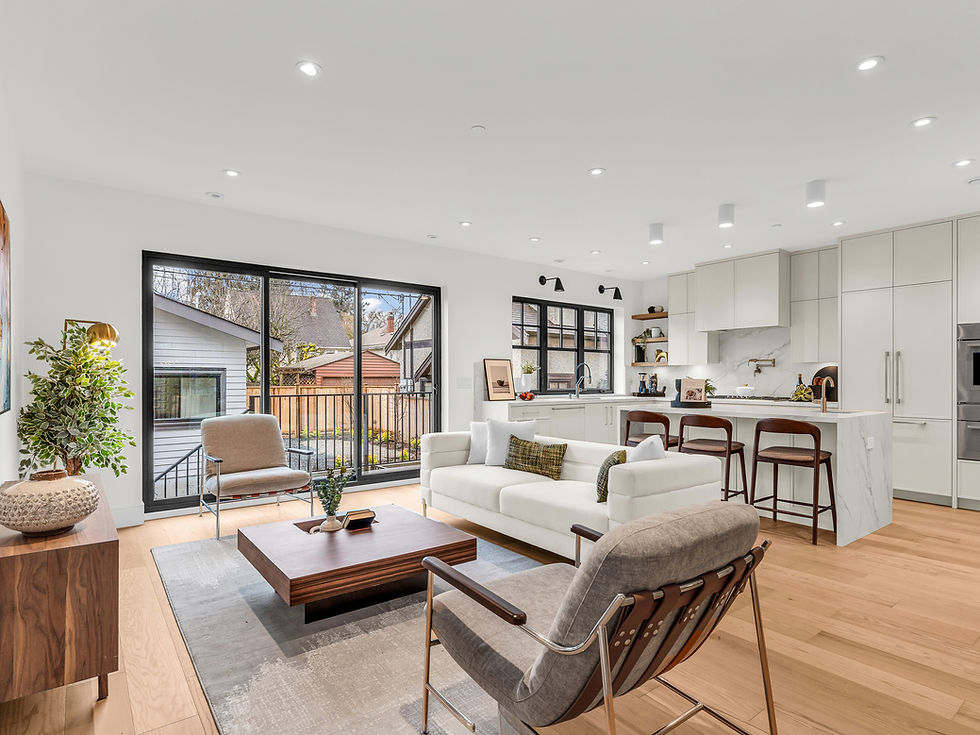
W18th was a full renovation of a heritage Vancouver property. Existing homes create a different category of complexity because wiring, plumbing, framing, moisture damage, insulation gaps, and previous alterations may not be visible until the structure is opened. The project transformed the home while retaining its character.
What it demonstrates: For a heritage or character-home project, choose a builder who understands how to investigate existing conditions, communicate discoveries clearly, and coordinate design decisions without losing sight of what makes the original home worth preserving.
Alta Lake - Whistler Custom Home
Modern Alpine Living

Alta Lake is a 3,800 sq ft custom home in Whistler, designed with stone, timber, steel, and expansive glazing. Its mountain setting brought terrain, climate, access, excavation, and structural considerations that needed to be accounted for early.
What it demonstrates: A portfolio should prove geographic relevance as well as design ability. Experience with the terrain, climate, access, and approval environment can materially affect how a project is planned and managed.
Frequently Asked Questions
How do I choose a home builder in Vancouver?
Start by confirming the builder's BC Housing licence, relevant insurance, WorkSafeBC standing, and experience in your municipality. Then evaluate portfolio fit, references, who will manage the site, how the builder communicates, and how the contract handles scope, allowances, billing, changes, warranty, and delays. Compare the completeness of the proposals, not just the totals at the bottom.
Are home builders in BC required to be licensed?
For most new-home construction, yes. Builders must generally hold a current BC Housing Residential Builder Licence and arrange third-party home warranty insurance unless a specific exemption applies. An owner builder requires authorization from BC Housing and assumes responsibilities that would otherwise sit with a licensed builder.
Does CHBA-BC or HAVAN membership matter when choosing a builder?
Membership is voluntary and does not replace licensing or due diligence. It can indicate participation in an industry code of ethics, education, professional development, and a broader building community. Verify the membership directly and consider it alongside the builder's licence, portfolio, references, and working process.
What questions should I ask a custom home builder?
Ask about comparable projects, municipal experience, the assigned project manager and site supervisor, estimate assumptions, allowances and exclusions, scheduling, client communication, change orders, billing documentation, insurance, warranty service, and references. Ask what went wrong on a past project and how the builder handled it; the answer can be more revealing than a list of successes.
How should I compare Vancouver home builders and their estimates?
Ask each Vancouver home builder to price the same drawings, specifications, allowances, services, and finish expectations. Then compare what is included, excluded, or still undefined—not only the totals. Relevant municipal experience, project-team structure, communication, and demonstrated finish quality should be considered alongside price.
What are the biggest red flags when choosing a home builder?
Watch for unverifiable licensing, vague estimates, unusually low pricing without a scope explanation, reluctance to provide references, no clear site-management structure, poor early communication, verbal promises that are absent from the contract, and claims that municipal approvals or construction conditions are guaranteed.
Continue Your Research
Choosing the builder is easier when you also understand the two variables homeowners ask about most:
Final Thoughts
The right custom home builder in Vancouver should be judged by more than the first number on the page. Licensing establishes a necessary baseline. Local experience helps the team anticipate the realities of the site and municipality. A relevant portfolio shows what the builder can execute. Clear communication, contracts, and billing reveal how the relationship is likely to work once construction begins.
Ultimately, you are choosing the people responsible for carrying an idea through hundreds of decisions without losing the original intent. The right builder should leave you confident not only in what will be built, but in how you will get there. When you are ready, feel free to contact us to discuss your project.


Comments